
Pasta al Limone
Pasta, lemon juice and lots of parsley and garlic create a lively, weeknight quick, vegetarian dinner.
Servings 4
Ingredients
- 16 ounces uncooked spaghetti, or other long pasta
- 4 tablespoons olive oil
- 4 large cloves of garlic, minced
- 1 teaspoon crushed red pepper (see Kitchen Notes)
- 1 lemon juice and zest
- 1-1/2 cups chopped Italian flat leaf parsley
- 1/2 cup grated Parmesan cheese, plus more
- salt and freshly ground black pepper
Instructions
- Set a pot of salted water to boil. Cook pasta according to package directions until just al dente. Drain, reserving 1 cup of pasta water.
- While pasta is cooking, heat olive oil in a large sauté pan or skillet. Add garlic and crushed red pepper. Cook, stirring frequently, for about 2 minutes. Reduce heat if garlic starts to brown. Turn off heat and stir in lemon zest.
- When pasta is done, add to skillet along with lemon juice and a little pasta water, and return to medium flame. Add parsley. Toss to combine everything, adding more water as needed to moisten pasta, if dry. Cook until heated through, 1 or 2 minutes.
- Add 1/2 cup grated Parmesan and toss to combine. Taste and season with salt and pepper, as needed.
- Divide among 4 shallow pasta bowls and top with additional grated Parmesan, to taste. Serve.
Kitchen Notes
How much crushed red pepper? A teaspoon sounds like a lot, even to us. But honestly, it really barely added any fire—it just added to the liveliness of the dish. Let your own heat tolerance be your guide.
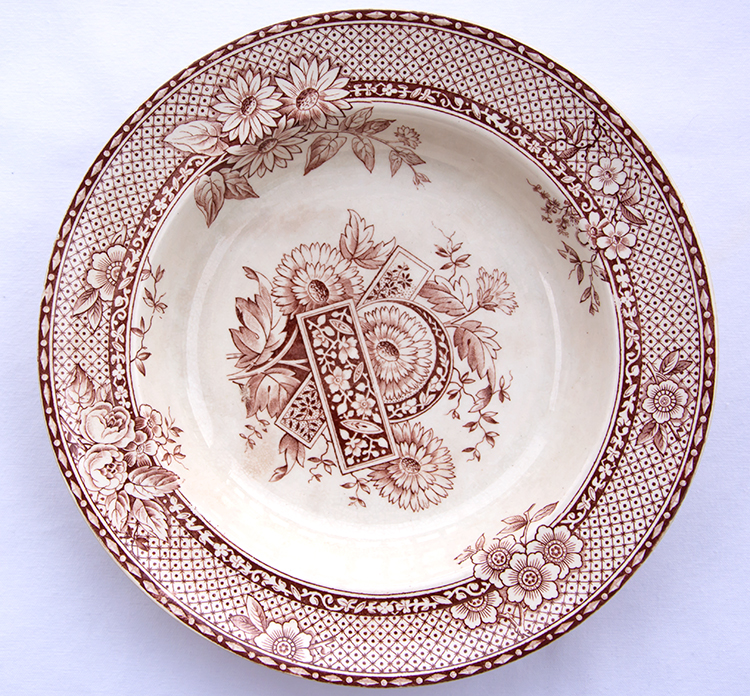
Liz’s Crockery Corner. Marion here. I found this soup plate in a resale shop in Milwaukee a few years ago, stuck among a lot of brown plates from the 1960s which the shop owner kept trying to tell me were a perfect match for it. I told her the truth, which is that we don’t have anything that matches anything else, and that was a thing she understood.
 In 1882, Oscar Wilde was traveling across the United States, delivering the lectures that would make him famous not just as a writer, but a tastemaker. His “House Beautiful“ lecture, which I believe was first delivered in Chicago, remains the most influential of all these talks. In it, Wilde alternately scolds and advises Americans—not just about their taste in art, but about the way they design their cities (“so much bad work”), decorate their homes (“meaningless chandeliers,” “too many white walls”), heat their homes (the machine-decorated iron stove, he said, is “as great a bore as a wet day or any other particularly dreadful institution”), and even how they dress (the best-dressed American men, he said, were “the Western miners”). Really, the whole thing is witty and ridiculous and annoying all at once, even now. But its enormous popularity speaks to Americans’ longing for beautiful things and a satisfying life—which, of course, we still feel. My favorite bit in the whole talk is this one sentence: “I speak for those whose desire for beautiful things is larger than their means.”
He didn’t, not really, but then you have this wonderful soup plate: the Marlborough pattern from Dunn, Bennett & Co., registered just months later in February 1883, a wonderful piece created for the American market, where it was sold for a modest price. Just look at those sunflowers—which, along with lilies, were the floral emblem of the aesthetic sensibility. By the way, Dunn Bennett & Co. actually survived until 1968, when it was acquired by Royal Doulton.
In 1882, Oscar Wilde was traveling across the United States, delivering the lectures that would make him famous not just as a writer, but a tastemaker. His “House Beautiful“ lecture, which I believe was first delivered in Chicago, remains the most influential of all these talks. In it, Wilde alternately scolds and advises Americans—not just about their taste in art, but about the way they design their cities (“so much bad work”), decorate their homes (“meaningless chandeliers,” “too many white walls”), heat their homes (the machine-decorated iron stove, he said, is “as great a bore as a wet day or any other particularly dreadful institution”), and even how they dress (the best-dressed American men, he said, were “the Western miners”). Really, the whole thing is witty and ridiculous and annoying all at once, even now. But its enormous popularity speaks to Americans’ longing for beautiful things and a satisfying life—which, of course, we still feel. My favorite bit in the whole talk is this one sentence: “I speak for those whose desire for beautiful things is larger than their means.”
He didn’t, not really, but then you have this wonderful soup plate: the Marlborough pattern from Dunn, Bennett & Co., registered just months later in February 1883, a wonderful piece created for the American market, where it was sold for a modest price. Just look at those sunflowers—which, along with lilies, were the floral emblem of the aesthetic sensibility. By the way, Dunn Bennett & Co. actually survived until 1968, when it was acquired by Royal Doulton.
In 1882, Oscar Wilde was traveling across the United States, delivering the lectures that would make him famous not just as a writer, but a tastemaker. His “House Beautiful“ lecture, which I believe was first delivered in Chicago, remains the most influential of all these talks. In it, Wilde alternately scolds and advises Americans—not just about their taste in art, but about the way they design their cities (“so much bad work”), decorate their homes (“meaningless chandeliers,” “too many white walls”), heat their homes (the machine-decorated iron stove, he said, is “as great a bore as a wet day or any other particularly dreadful institution”), and even how they dress (the best-dressed American men, he said, were “the Western miners”). Really, the whole thing is witty and ridiculous and annoying all at once, even now. But its enormous popularity speaks to Americans’ longing for beautiful things and a satisfying life—which, of course, we still feel. My favorite bit in the whole talk is this one sentence: “I speak for those whose desire for beautiful things is larger than their means.”
He didn’t, not really, but then you have this wonderful soup plate: the Marlborough pattern from Dunn, Bennett & Co., registered just months later in February 1883, a wonderful piece created for the American market, where it was sold for a modest price. Just look at those sunflowers—which, along with lilies, were the floral emblem of the aesthetic sensibility. By the way, Dunn Bennett & Co. actually survived until 1968, when it was acquired by Royal Doulton.